Category

News

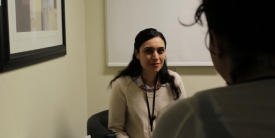
Shirin working as a counsellor

Meet Shirin: Part 5

By | News

GROUP COUNSELLING

Recently, we introduced you to Shirin, one of our long-time Women’s Counsellor Advocates. Each month, we’ve been shadowing Shirin to give you an idea of what a day’s work is like as a counsellor at Interval House.

While women live at Interval House, they attend group counselling sessions twice weekly: on Mondays and Thursdays. These counselling groups cover a wide variety of topics from self-esteem, the cycle of abuse, and healthy relationships to time management and budgeting.

Today, Shirin is leading a counselling group on problem-solving.

The goal of all counselling groups is to help women at Interval House gain practical life skills and to interact as a group. Because all the women have the shared experience of fleeing an abusive relationship, being in a group and talking about these types of issues can be a big opportunity for growth, healing, and friendship.

To start the problem-solving group, Shirin asks the residents to pick a common problem that they face. Once they’ve selected a problem, they brainstorm as a group to see which technique or approach will work best.

“I always ask everyone to share as much as possible,” says Shirin. “We won’t force women to participate, but when they see other residents open up, it encourages them to share too.”

Last week, Shirin led a group on assertiveness.

Shirin led the group through some activities to help them practice standing up for themselves in a way that’s assertive, but not angry or aggressive. A few days later, one of the women who joined that group, Melinda*, went to the office to speak with Shirin.

“I practised the techniques you taught me, Shirin,” Melinda told her. “I said ‘no!”

While it might seem like a small step, being assertive and communicating boundaries can be a huge step towards rebuilding confidence and self-esteem for women like Melinda. For many of the women at Interval House, being assertive can be difficult: they may have trained themselves to walk on eggshells for so long to avoid their abuser becoming angry.

For that reason, counselling groups like the ones Shirin runs are an important stepping stone for women on their road to independence and a life free from violence.

For the next few months, we’ll be giving you a glimpse into Shirin’s work, taking you step-by-step through a day in the life of a counsellor at Interval House. Stay tuned for the next part in our series, when we follow Shirin through the process of helping a resident move out.

*Names and some details have been changed for safety and privacy.

diplomas with purple ribbons

Celebrating Women Entering the Workforce: The 2016 BESS Reunion and Graduation

By | News

On June 22nd, Interval House hosted the 6thAnnual BESS Reunion and Graduation to honor past and present program graduates. It was an emotional night that inspired everyone who attended and made them proud to be a part of the BESS program.

The Building Economic Self-Sufficiency (BESS) program is an employment program that addresses the unique needs of women who are survivors of domestic violence. Participants gain the tools they need to find a job and achieve exactly what the name of the program says: economic self-sufficiency. Women learn through BESS how to write a resume and cover letter, conduct a job search, practice their interviewing skills, and how to balance work and parenting. This year, the BESS program boasts 39 graduates, 6 employer partners, and 45 women served by Job Development.

The night began with a motivating speech made by Phil Soper, President and CEO of Royal LePage & Brookfield Real Estate Services and founder of the Royal LePage Shelter Foundation. The Foundation is dedicated to eradicating domestic violence by supporting shelters across the country. In his speech, he explained his personal involvement with the BESS program as an employer partner and his views on the importance of economic self-sufficiency.

Following Mr. Soper’s inspiring speech, Dr. Helena Jaczek, Minister of Community and Social Services, made a special address to announce some exciting changes for the sector, emphasized shelter accessibility, and shared her congratulations to the graduates.

The 2016 valedictorian moved the entire room to tears when she thanked the BESS program and concluded her speech saying, “They say when one door closes, another door opens. But I think when a door closes, many, many doors open.”

After the valedictorian’s speech, graduate awards were given to four high-achieving graduates. Presenting the graduate awards were Kip Southam, Phil Soper, Colin Webster, and Michael Young.

It was a truly touching evening and we were glad to recognize Clear Cause Cleaners, Luminus Financial, Metro, Royal LePage Shelter Foundation, and Timbercreek and our dedicated donors: CIBC, LesLois Shaw Foundation, Michael & Sharon Young, R. Howard Webster. Special thanks to our event sponsors Wyse Meter Solutions (Flower Sponsor) and VO2 Health Focus (AV Sponsor) who made the evening possible.

a finger pointing at someone

Victim Blaming: Changing the conversation around abuse

By | News

Hollywood and the celebrity gossip mill often seem like harmless forms of entertainment – dissecting the fashion, lifestyles, and personal lives of entertainers can be light-hearted watercooler conversations. The personal lives and dramas of our favourite entertainers become global news stories, and we see relationships play out on a massive scale.

Amber Heard Vs. Johnny Depp

This was the case when actress Amber Heard recently filed for divorce from famous actor Johnny Depp. But the news quickly became serious: Heard filed for a restraining order, and accused Depp of repeated physical abuse throughout their marriage. Once again, a celebrity abuse case is front-page news.

Much of the public commentary has been supportive of Depp, with many accusations and criticism directed at Heard. The backlash and outcry directed at Heard is an all-too-familiar response that many women face when they flee their abusers. While we’ve made steps to have supportive resources and help available for those who leave abusive relationships, there’s still a tendency to question victims about the experiences and circumstances that led to abuse. This is called victim-blaming.

Victim-blaming

The term “victim-blaming” has dominated headlines with high-profile cases such as Jian Ghomeshi and Brock Turner. But what does it mean exactly? Victim-blaming is defined by The Canadian Resource Centre for Victims of Crime as: “A devaluing act that occurs when the victim(s) of a crime or an accident is held responsible — in whole or in part — for the crimes that have been committed against them. This blame can appear in the form of negative social responses from legal, medical, and mental health professionals, as well as from the media and immediate family members and other acquaintances.”

The blame and shame associated with domestic violence is enough to make many survivors stay in abusive relationships, or rationalize the behavior of their abusers. Earlier this year, Interval House commissioned a study which found that 37% of Ontarians believed that a person is responsible for the consequences if they choose to stay in a violent relationship. The belief was higher in men (46%) then women. Unfortunately, many people still question why a woman would stay in the relationship, putting the onus on her to end the abuse, not on her abuser.

Changing the conversation

Questions like “Why did she stay for so long?” “Why did she get into an abusive relationship?” “How could she allow that to happen to her?” make the abuse about what the victim did. Why isn’t the question “How could he ever think it was okay to abuse her?” “How could he not seek help for his actions?” The conversation is focused on the woman’s role in the partnership, when the reality is that no one ever deserves, asks for, or consents to abuse.

These harmful reactions from others – strangers and loved ones alike – only serve to reinforce the cycle of abuse, and can result in women staying in abusive relationships longer, refusing to report violence and seek outside help, or even refusing to leave altogether. Questions and disbelief don’t necessarily come from individuals far removed from the situation as we see in the Heard vs. Depp case, but often even from some of the victim’s closest support network.

Being in an abusive relationship is an isolating experience as it is. Being trapped in an unhealthy and painful relationship, while keeping up the veneer of a happy partnership is exhausting. It’s easy for survivors of violence to fall into the trap of self-blame and think incorrectly “I deserved this.” “If only I hadn’t been so _____”.

To open up about the reality of an abusive relationship is a courageous act. We must change the conversation around abuse, and empower survivors of domestic violence. Abuse does not discriminate, and neither should we. Whether a Hollywood actress or an everyday woman, we owe survivors our compassion, empathy, and non-judgement. Living free from violence is not a privilege; it is a right.

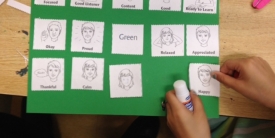
Hands glueing small drawings of faces onto a piece of construction paper

Helping kids feel their way to a life without violence

By | News

It’s okay to be angry, but it’s the way we deal with our anger that matters. That’s the message at the heart of a new activity introduced in the children’s program designed to teach kids to develop good coping strategies. The Zones of Regulation¹ sessions start with colour-coded zones—red, yellow, green and blue—to help children identify how their brains and bodies feel.

Through a series of activities, children learn to help themselves when they become stressed, bored, anxious or sad. They come away with a toolbox of strategies including breathing exercises and counting-down exercises—to stay in a zone, or move from one to another.

Rubina, the Children’s Counsellor Advocate who runs the program, says many of the children at the shelter have been exposed to violent incidents; they often emulate adults including the rage, anger and grief they have seen. Children learn to recognize these emotions as the “Red Zone”, feelings of being out of control. She says, “The most heartbreaking thing for mothers to see is when their child is doing the same thing that the father used to do.”

Rubina says these kinds of children’s programs are so important at Interval House because it ensures the next generation will have the tools to build resilience and thrive as they move on with the rest of their lives. “We tell them that the Green Zone—happy, calm and focused— is where they should try to be most of the time, and we help them figure out how to bring themselves back there.”

Your generous support helps provide programs like this one to help women and their children break the cycle of violence.

1. Created by Kuypers Consulting, Inc.

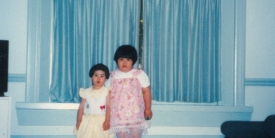
Two young girls posing in front of a window

I have only wonderful memories of my time at Interval House

By | News, Success Story

On my quest to find happiness, I took a meditation class and I learned about the word seva: it means service. The whole idea is to be more compassionate—to give without expecting anything back—and it got me thinking about reconnecting with a place that made such a positive impact on my life.

I was only 2 years old, and my sister was 4 when our mom brought us to live at Interval House. This is when they were still in the little building on Huron Street. I remember the big living room where we ran and played and I remember finding a vent on the wall where we would whisper to each other across the room. And the washroom—lots of kids brushing our teeth together!

Here I am, more than 25 years later. I’m about to graduate from business school and my memories of living in the shelter are so positive. I can still picture the nice lady with red hair who always carried me around, and the room full of donated presents where my mother went to choose our Christmas gifts I can see now how the whole experience set us in the right direction.

My sister and I talked about how we used to see all the moms gathered together, rummaging through piles of newly-donated clothing. When I think about the women squabbling over those clothes now, it makes me emotional. We understand how much it means to these families. And that’s why we decided to donate clothing for the women at Interval House, and to deliver them ourselves.

The first time we went back, we brought along some of the old photos we have from our time there. Right away Nadine and Arlene remembered us. Imagine, with so many families coming and going that they remembered ours! They even confirmed my memory about another staff member who really loved kids— the woman with the red hair!

Thinking back on it now, I don’t remember seeing my mom sad. It’s amazing how parents can shelter kids from this kind of stuff. I didn’t even know that it wasn’t our home. I just thought it was a really fun place.

Some of my fondest memories:

I remember my mom would bring us to The Lion King, Beauty and the Beast, and all of those amazing shows as a young kid and I know the tickets were from Interval House donors. I think that’s why I still love Broadway shows—those were such wonderful memories.”

I always had my blanket with me—it’s just a plain grey knitted blanket and I still have it. and it was just the best thing. It’s very big but it’s light and thin and it keeps me warm. I just love the feeling of it, the texture.”

My mom would sometimes talk about her injuries and how my dad was very quick tempered, all of a sudden good mood, bad mood and that it was unpredictable. These were only brief conversations but I don’t recall seeing the injuries.

If you or your family have spent time at the centre and would like to reconnect with Interval House or share your story, we’d love to hear from you! Please contact us at info@intervalhouse.ca or call 416-924-1411 x 238.

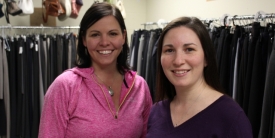
Bobi and Anne in the clothing boutique

Bobi & Anne: Turning their retail knowledge into a new start for women

By | News

The first time Anne and Bobi came to Interval House, they were part of a corporate volunteer group that volunteered for a day around the holidays. In addition to decorating and cooking a big family meal, they toured the house and heard stories about women who had the courage to leave an abusive home—women who were brave enough to start their lives from scratch, caring for their children alone.

The experience moved Anne and Bobi to want to do more. Help was desperately needed in the donation room—the rather un-glamorous and exhausting job of sorting and organizing all the huge cumbersome bags of gently used clothing, shoes and purses that come in the door each week. No wonder no one wanted to do it!

But together they took on the challenge, bit by bit. With their knowledge of retail operations and skills in merchandising, they were able to envision a more efficient, appealing space that’s more like a real boutique—displaying the hand-picked selection of items to make it easier for women to find clothes that not only fit, but also make them feel good when they were ready to go out into the world.

Volunteering together every week, Anne and Bobi say they get tremendous satisfaction from their contribution. Like so many Interval House supporters, they say how great it feels to know they are helping women take the next step in their lives in a positive direction.

If you’d like to donate gently used clothing or other items for the women and children of Interval House, please email donationdropoff@intervalhouse.ca or call 416-924-1411 ext. 256 to schedule an appointment.  

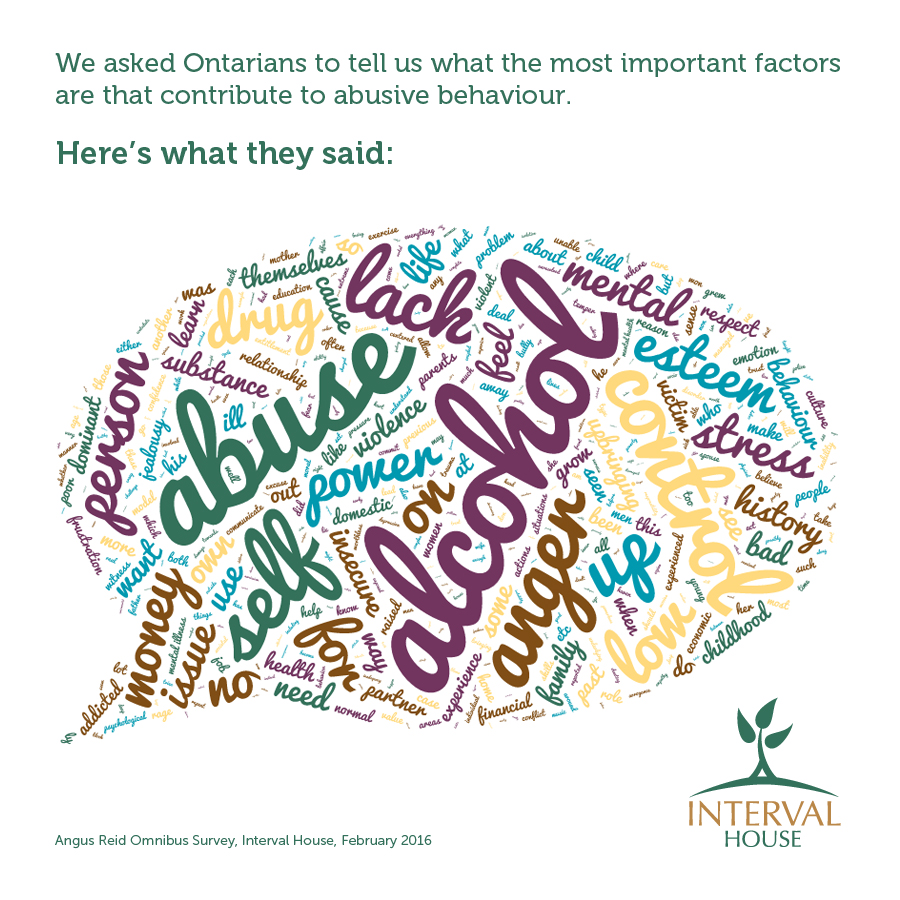
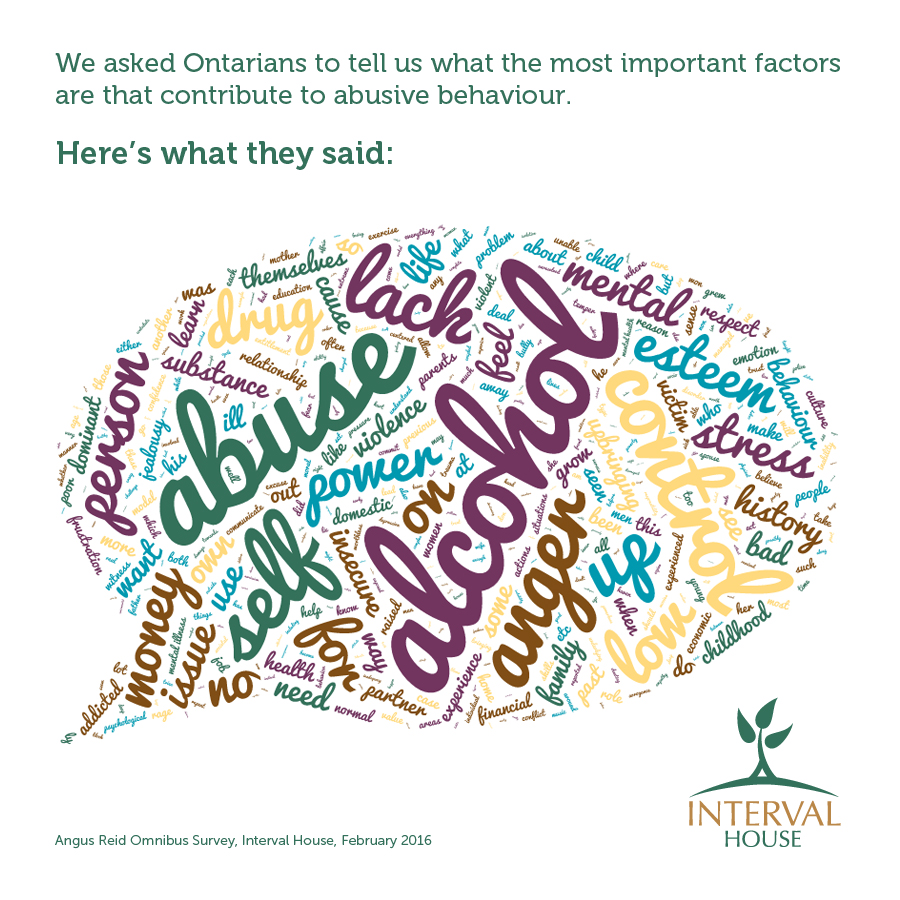
Word cloud with factors contributing to abusive behaviour

Is domestic violence about power and control?

By | News

In February of this year, Interval House posed this question to Ontarians through an Angus Reid Omnibus Survey: “What are the most important factors that contribute to abusive behaviour?” We let them answer in their own words and used the most common responses to make a word cloud. Each week for the next month, we’re addressing a common attitude about the causes of domestic violence to investigate: is it true? Or is it a myth?

In this post, we answer: does a desire for power and control cause domestic violence?

For the past month, we’ve covered many of the popular beliefs about what causes domestic violence. In this final post, we’re going to cover the last theme that emerged when we talked to Ontarians: power and control.

If you take a look at the word cloud, “control” was one of the most popular responses; “power” was also a common response. Is domestic violence caused by a desire for power and control?

TRUE: As you may have guessed if you read the other posts in our series, domestic violence is usually caused by the abuser feeling entitled to hold a position of power over their partner.

For example, in last week’s post, we talked about how wanting to be powerful and controlling can be a learned behaviour for abusers who experienced or witnessed abuse as children. And in other weeks, we talked about how power and control are the real motivations, even in cases involving an abuser’s substance abusemental illness, or anger management problems.

The underlying cause is the desire for power and control – it’s the common denominator in every abusive intimate partner relationship.

Power and Control Wheel

Anti-violence advocates and women’s organizations often use the “Power and Control Wheel” ¹ to show the common behaviours that abusers use to establish and maintain control over their partner. This model explains domestic violence as involving a continuum of behaviours that overlap:

  • Coercion & threats
  • Emotional abuse
  • Minimizing, denying, blaming
  • Using children
  • Economic abuse
  • Male privilege

All of these behaviours are about one partner controlling the other. Physical violence in an abusive relationship is often accompanied by “domestic terrorism”: emotional, psychological, and financial abuse that further erodes their partner’s independence, self-esteem, and access to the outside world.

And this power and control is usually gendered. The reason that people who identify as women represent the vast majority of abuse survivors is because of the belief that men have a right to control women. This goes beyond an individual partner’s alcoholism or anger management issues: it’s a systemic issue that stems from widespread beliefs about women being “less than” men.

Of course, we see this gendered power imbalance at play outside of abusive relationships:

  • When women face sexual harassment and assault walking down the street, in their schools, workplaces, and homes
  • When women earn less than men and are less represented in positions of power in business and government
  • When women are blamed by their families, friends, or others when they talk about violence they experienced
  • And in a whole host of other situations that people who identify as women confront every day

But, if domestic violence is about a bigger system that sets up men to have power and control over women, then… how do we even begin to end domestic violence?

Well, there’s obviously not an easy answer. But if domestic violence is about attitudes towards women, we can challenge those attitudes.

To work to end the root causes of domestic violence, we can:

  • Speak out about the issue of violence against women
  • Hold perpetrators of violence accountable, and not excuse their violence
  • Believe survivors of violence who share their stories and tell them it’s not their fault
  • Support opportunities for women to become independent and economically self-sufficient, like Interval House’s BESS program

The causes of abusive behaviour may not be straightforward, but we can still work to end domestic violence. Learn how else you can take action.

This is the last post in our myth-busting series. Check out our earlier posts:

Sources:

  1. © 2011 Duluth Model Power and Control Wheels from Domestic Abuse Intervention Programs www.ncdsv.org/images/powercontrolwheelnoshading.pdf
Stock image of a woman thinking surrounded by large question marks

How long do women stay?

By | News

When a woman leaves an abusive situation and comes to our shelter, she’ll have many questions and unknowns about Interval House, the process, and the timelines for rebuilding her life. One of the questions we’re asked most often is how long do women stay at our shelter?

The answer: A woman will typically stay at our shelter for three to four months. This timeline is for several reasons. After her stay with Interval House, many residents will move into City of Toronto subsidized housing. This resettlement process takes three to four months.

There is typically a five- to six- year waiting list for subsidized housing. However, domestic violence survivors that can provide documentation that they lived with their abuser can get on a priority waiting list due to safety concerns.

A period of three or four months is also a good amount of time for a woman to get through the initial crisis and feel ready to be independent again.

But this is only a rough estimate. It’s certainly not etched in stone. Each situation is different, and timelines are specific to each family and their needs. If a family is approaching three months at our shelter and are not ready to move out, they are definitely welcome to stay with us longer.

Some reasons a women may stay with us longer include:

  • Severe trauma: For example, if she experienced severe physical violence, potentially resulting in her needing medical attention.
  • Immigration status: A woman’s immigration status can delay and complicate her ability to access housing, particularly government-subsidized housing.
  • Disability: Women or children who need accessible housing often have to wait longer to find a unit that’s suitable for them to move into.
  • Safety: If her abuser is stalking her and finds her, we need to transfer her to another shelter, which can prolong the process of her moving out on her own.
  • Lack of documentation: If a woman can’t prove that she lived with her abuser, she won’t be eligible for the priority list through the City and we’ll need to help her look at other housing options.

Whether she stays for the typical three or four months—or stays for a longer period of time—we want to help her rebuild and get back on her feet.

Word cloud of reported factors that contribute to abusive behaviour

Does a history of childhood abuse cause abusive behaviour?

By | News

What are the most important factors that contribute to abusive behaviour?

In February of this year, Interval House posed this question to Ontarians through an Angus Reid Omnibus Survey: “What are the most important factors that contribute to abusive behaviour?” We let them answer in their own words and used the most common responses to make a word cloud. Each week for the next month, we’re addressing a common attitude about the causes of domestic violence to investigate: is it true? Or is it a myth? In this post, we answer: does a history of childhood abuse cause abusive behaviour?

One of the most common words used by Ontarians to describe the cause of abusive behaviour was, unsurprisingly, “abuse” – it’s the second most common word used in responses.  This is partly because many respondents pointed to childhood abuse as a cause of abusive behaviour later in life; “childhood” and “history” can also be found in the word cloud.

This is something we often hear: that exposure to abuse as a child leads people to become abusive later in life. Is this true?

TRUE, SOMETIMES: There are undoubtedly long-term, serious effects of experiencing or witnessing abuse as a child. Studies show that children who are exposed to violence can be more likely to repeat the cycle that they learned and grow up to become either victims or abusers themselves.1

This is true even for kids who aren’t themselves the targets of abuse. Children who witness acts of violence, against their mother or someone else in the home “can be affected in the same way as children who are physically and sexually abused.”2

Children living in a violent environment like this may come to believe that this behaviour is acceptable, and this has long-term consequences for their development. UNICEF writes that, “The single best predictor of children becoming either perpetrators or victims of domestic violence later in life is whether or not they grow up in a home where there is domestic violence.”3

This is why Interval House’s Children’s Program is so important.

It’s crucial that we’re able to intervene with kids at a young age, offering them the opportunity to learn about healthy relationships, conflict resolution, self-esteem, and boundaries.

But at the same time, it’s important to note that the relationship between childhood exposure to violence and abuse later in life isn’t a given. While many adult abusers and survivors of violence did grow up with violence in the home, not all children with domestic violence in the home experience violence again later in life.

And not all abusers were abused or exposed to domestic violence as children. While learning these behaviours from a parent or other adult can be a powerful way that violence, power, and control become normalized, it’s not the only way that abusers learn these behaviours. A belief in men’s right to control women, or a desire for power and control can stem from other circumstances. We’ll tackle the root causes of this belief in our final post, next week.

Stay tuned for the final post in our myth-busting series, where we tackle the question: does a desire for power and control cause domestic violence?

Sources:

  1. http://www.unicef.org/protection/files/BehindClosedDoors.pdf
  2. http://www.vawnet.org/Assoc_Files_VAWnet/PCAA_DVandChild.pdf
  3. http://www.unicef.org/protection/files/BehindClosedDoors.pdf
Woman smiling and looking over her shoulder

At Interval House, we speak empowerment

By | News

The life experiences of women who live at Interval House are as diverse as their cultural backgrounds.  In 2015 alone, our residents spoke 29 different languages.

Not having English as a first language can be an extra challenge that survivors face in order to access resources and to lead an independent life away from domestic violence. At Interval House, we want to make sure that women are set up for success, and supporting them in their language learning is crucial.

This became the goal of a group of volunteers who created an in-house ESL program at Interval House. The program is highly practical as it teaches women language and grammar that allows them to navigate their everyday routines, and strengthens their capability to access health, education and employment. To learn more about the volunteer- run ESL program click here.

Being able to communicate with others at Interval House is central for women to benefit from the programs we offer.  We’re lucky to have counsellors who speak many languages. They can offer services in multiple languages and provide informal interpretation.

However, we can’t always guarantee that we’ll have a counsellor on staff who can speak the language of a new resident. In these cases, we rely on the support provided by the Barbra Schlifer Clinic’s Interpreter Services Toronto. These interpretation services are specialized and highly sensitive. Interpreters are professionally trained and have knowledge about violence against women issues. Services are free of charge for service providers, provided in 200 languages and are available seven days a week, 24 hours a day.

Interpreters come to the house for a minimum of three times a week. They are present during our weekly House Meeting, and at the Counselling Groups which take place twice a week.  We welcome interpreters into Interval House because their work enables women to fully participate in activities, to express themselves clearly and to feel safe as they can use their first language to talk about their experiences and needs.

Throughout their journey from violence to independence, we want to meet women where there are at. We want to ensure that irrespective of their English language skills, they can feel understood and that they belong. We accompany them in many aspects of their journey towards empowerment; ensuring that women are being able to speak their minds, in either English or their first language. That’s what we’re here for.

Translate »