Category

News

Interval House—the First Shelter for Abused Women and Children in Canada

By | News

“It’s important to engage in hopeful practices. We expect so much of women who are trying to leave abusive relationships—that they should have hope for the future. We have to do our work with hope too. Donors have their own reasons for believing in hope. It affirms the women’s courage.”

– Lynn Zimmer, one of the 11 founders of Interval House

When Lynn Zimmer volunteered for a women’s organization in the early 70s, she knew very little about domestic violence. As a participant in the women’s equality movement, Lynn believed that a woman should be able to leave a bad relationship if she wanted to. Lynn answered calls from mothers who were seeking help—women with no money, no jobs, and no place to live. She had to refer them to the city-run residence for WWI veterans—the top floor was for families.

“The thing that horrified us when we went to see it,” she says, “was that you had to line up to get a bar of soap.”

A small band of volunteers were committed to providing a crisis centre for women and children who were fleeing abuse—they knew it needed to feel like a home. They put up a sign on a bulletin board asking women to help get something started. With just a handful of committed supporters, Interval House opened in 1973 as the first shelter for abused women and their children in North America.

Lynn remembers the outrage she felt when the local newspapers of the day referred to the residents as “runaway wives,” an expression that reflected an attitude of ignorance. Awareness about domestic violence has grown dramatically since then and women today are much more likely to find support—either at work, from their families, or from friends. What hasn’t changed however is the pattern of abuse. Lynn says, “The steady stream of women and children who’ve experienced physical and emotional abuse is apparently unending.”

Lynn has dedicated her entire career to ending domestic violence, and says she continues to be inspired by the courage and risk-taking demonstrated by individual women. She says she is grateful for donors who stand beside organizations like Interval House, providing the security and confidence to exist, until the day they are no longer needed.

Volunteer Corner

By | News

When people meet Nisha they notice two things: she’s always smiling and she’s a very good listener. But for a while, Nisha was holding a lot inside.

She grew up in a family that believed in helping other people. Even simple things like opening the door or getting a coffee for someone. So when she started Women and Gender Studies in university, she decided to become a volunteer for a couple of hours a week at Interval House. At first it was part of a school project, but she found it meaningful and she wanted to continue.

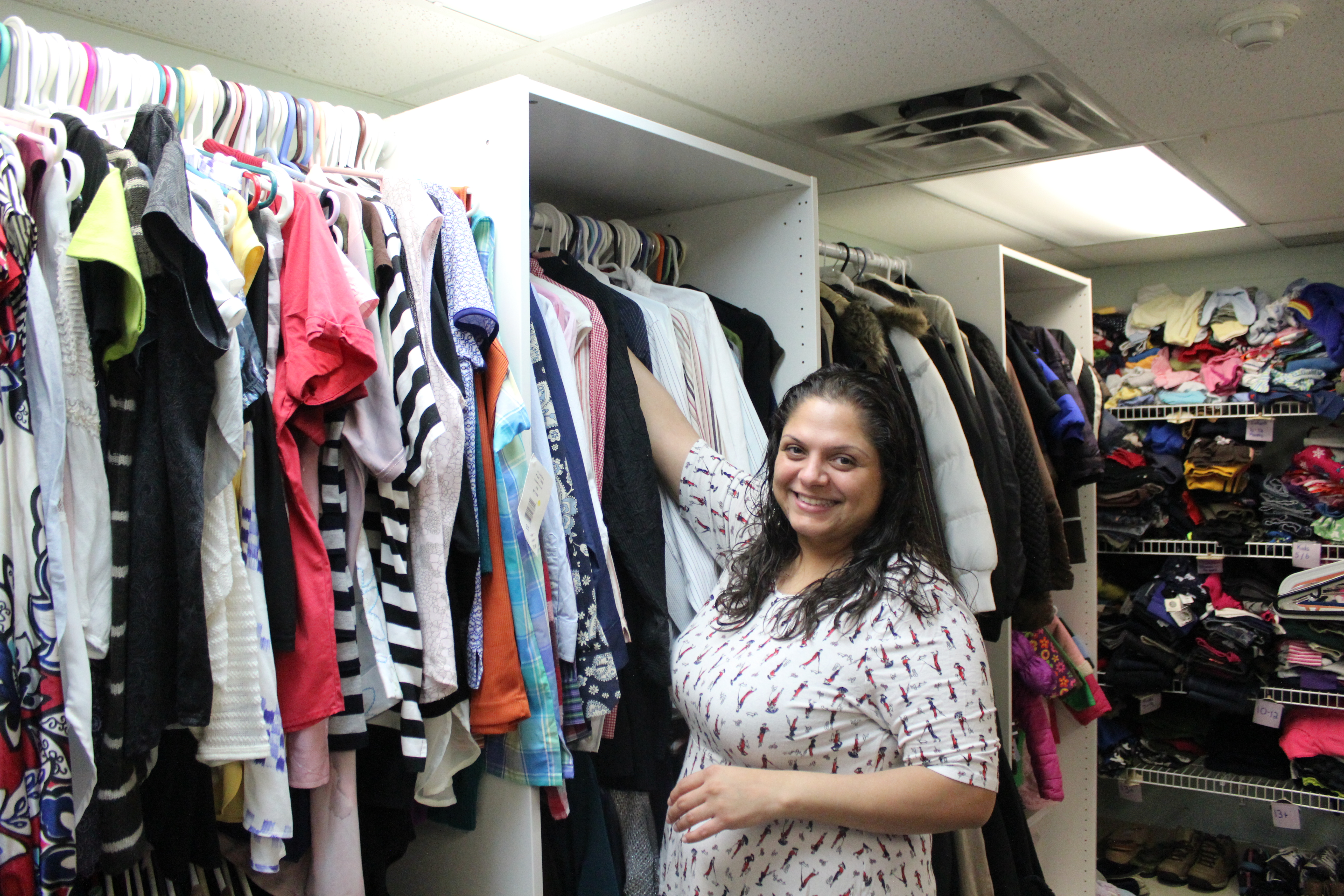
Nisha helps out at the shelter by sorting donations, choosing the used clothing and other items for the boutiques. She often has the opportunity to chat with residents at the house and has found it “eye-opening” and also motivating. Now a single mom of an infant and a 3-year-old, she says she left an abusive relationship and knows firsthand how important the programs are to women fleeing abuse.

Every time Nisha volunteers at Interval House, she enjoys the feeling that she can help other women in some way. In the future she’d like to do a Master’s degree or perhaps go to law school, but in the meantime, she plans to continue volunteering at the shelter whenever her schedule allows. Carefully sorting through donated items such as purses and shoes, Nisha enjoys knowing that she’s contributing to making the women’s lives better through her volunteer work.

Volunteers are critical to daily life at Interval House and take on a broad range of activities. If you’re interested in volunteering, send us an email at volunteer@intervalhouse.ca or call 416-924-1411 ext. 233.

Debunking Myths: New Ad Campaign Challenges Perceptions

By | News

When a partner in a romantic relationship is controlling and possessive, it’s not charming or passionate—it’s a sign of abuse. And knowing when it’s time to “get away” can be a much more complex decision than many people realize.

Not everyone understands—like you probably do—that women facing abuse may still be very much in love with their partners, and want to protect them. We know that survivors often rationalize their situations. We hear about abusers who appear to be perfectly sweet, honest and supportive—some of the time.

Interval House always aims to educate people about what abusive relationships really look like. We hope to encourage women who are currently in abusive situations to recognize what’s happening, and to leave the violence behind. We also hope to share this understanding with the wider populations so that people can identify when loved ones may be in dangerous relationship dynamics.

That’s why we launched our latest public service announcement (PSA) in time for Valentine’s Day, a time when people are surrounded by sensational messages of love and romance. Our PSA focuses on a key statistic: that it takes an average of five attempts for a woman to leave an abusive partner.

This is something Interval House donors like you have understood for a long time. Together, we’ve spent four decades helping women be “the one that got away.” You can check the PSA out here.

Meet the Mandels: Intergenerational Giving

By | News

Ruth has been donating to Interval House for years. She started as a young feminist by donating books and clothing to the shelter. Later in life, when she tried to get out of her own marriage, which eventually did end, she gained more insight into why women might choose to stay in problematic relationships.

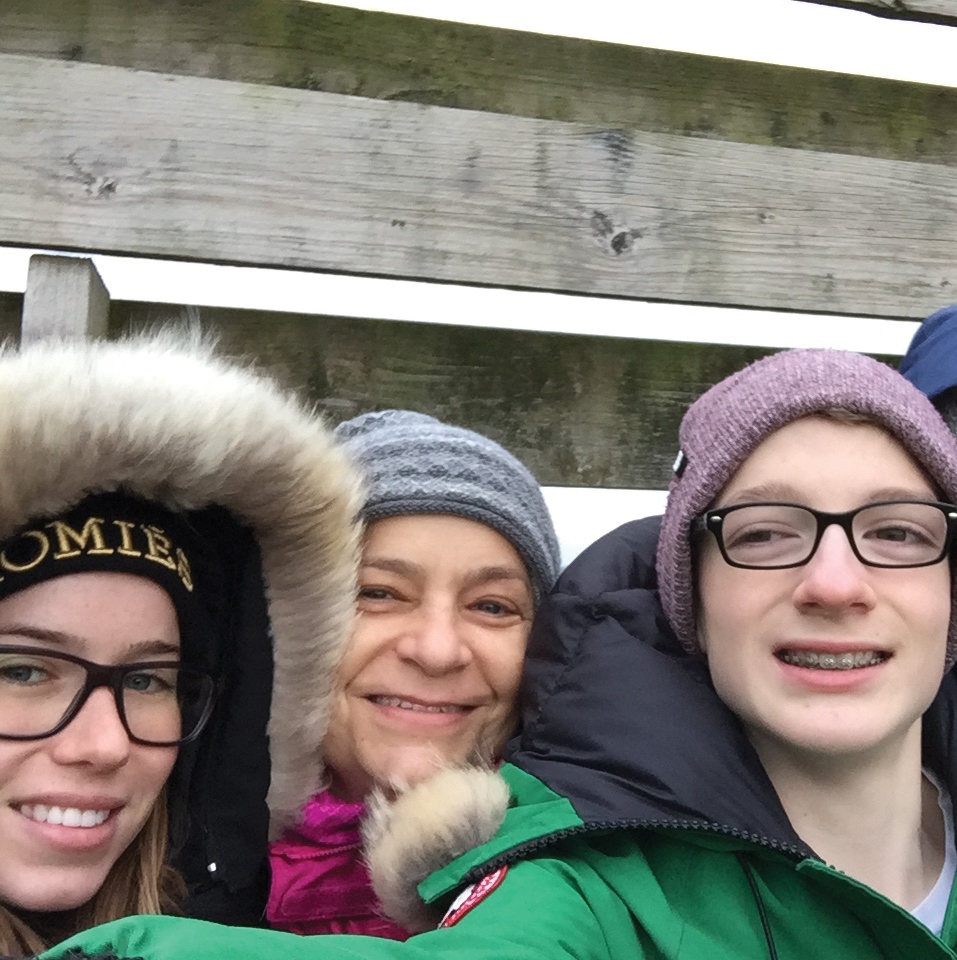
Ruth also knows that each of us is vulnerable to unexpected crises and feels keenly aware that we could all find ourselves needing help some day. It’s something she tells her children—21-year-old daughter, Ziva, and 14-year-old son, Tai’o. She also tells them we each have the power to make a difference, and is raising them to think like activist philanthropists.

Ruth calls herself a “renegade donor” and leads by example, making choices to get behind whatever she believes in—especially things that might escape the attention of other donors. When Ziva started high school, Ruth invited her to help make the decisions about where to donate money as a family. Ziva, like her mom, was drawn to Interval House because of the positive impact it makes on the lives of women and children. Ziva likes to talk about giving with her boyfriend as well. She feels it’s important to bring men into the conversation, to help them understand why women’s shelters are needed and what donors can do to help.

Recently, Ziva and Ruth visited Interval House together and they were struck by the warm atmosphere and the aspects of life in the shelter that are communal, like the way residents take turns cooking for each other. For Ziva, the visit cemented her commitment to Interval House. She became especially interested in showing her support for safety planning services—the tools and strategy a woman needs when she decides to flee with her children from a violent home. This includes such things as hiding away essentials and photocopying documents.

Ruth enjoys seeing the way it all resonates with her daughter and son. It pleases her to see that Interval House’s hard work, which she has supported for so many years, will carry on in the hands of her family’s next generation of philanthropists.

Summer is here!

By | News

Summer is here and school is finally out! The kids are always thrilled to have a two month break but it can be challenging for parents to find ways to keep their young ones busy and engaged. Luckily, the city of Toronto has so many fun and affordable, family-friendly activities to offer all summer long! There will be plenty of opportunity to make some great memories with family and friends. Here are a few ideas:

Movies in Toronto Parks

  • Movies outside? What could be better? Check out showtimes and locations here.

City Street Festivals

And, of course, the classics

These are just a few of many free and affordable options for fun this summer. Get out there, explore, and be a tourist in your own city! And remember, be sun safe and drink lots of water to avoid heat stroke and sun burns. From everyone here at Interval House, we hope your summer is filled with love, laughter, and fun in the sun!

Mother’s Day at Interval House

By | News

Sunday, May 14th will mark Mother’s Day in North America. It’s the day we celebrate the women who care for us, love us, support us, and stand by us. Every mother is unique, as are the ways that we celebrate moms around the world. In Australia, mothers, aunts, and grandmothers receive beautiful red carnations or chrysanthemums. In Brazil, some families host multi-generational barbecues to honour and celebrate their mothers. Ethiopia takes 3 days to celebrate their mothers with the Antrosht festival at the end of the autumn rainy season.

At Interval House Mother’s Day is a huge celebration too! We always have mothers staying here with their children, and the residents without children are always offering help and support. Here we have one big, blended family, and mothers are the foundation. The children staying here make Mother’s Day cards in the Children’s Program, and volunteer groups come to the shelter to lead fun activities and cook dinner for the residents.  Our residents take turns cooking dinner for up to 30 people every night, so this is a wonderful break for them. On Mother’s Day we are especially excited to give the mothers their gifts and show them how much they are appreciated and valued.

Culturally, when we think of the definition of a mother, we think of the one that loves us unconditionally, puts our needs before her own and is the one we can count on above everyone else. This definitely describes the mothers at Interval House. Their bravery and strength are undeniable. They have made the difficult and scary decision to leave abusive partners in order to make better lives for themselves and their children. For these women, this Mother’s Day will be the start of a new tradition and celebration.  Here, they are safe and supported, and are able to care for and love their children without the constant fear of abuse hanging over them. They’re able to take a break and relax. Some of them have been mothers for years, but this Mother’s Day will be unlike any other because this year, it will truly be about celebrating them.

Why not celebrate your mother this year by giving a gift in her honour to the mothers of Interval House?

With your generous donation we can continue to offer essential services to survivors of intimate partner violence and their children, such as 24 hour counselling for moms and kids. Through our employment and housing services, mothers are empowered to become self-sufficient and build safe futures for themselves and their children.

Let’s stand united in the campaign to end violence against women. Let’s celebrate the courage and determination of mothers that have chosen to break the cycle of abuse.

Happy Mother’s Day!

Meet Fred: Our Children’s Recreation Facilitator

By | News

As leaders in the campaign to end violence against women and children, Interval House is always looking for the best ways to address the diverse needs of the women and children we serve.  We continue to provide innovative services to empower survivors of family violence to transform their lives and break the cycle of abuse.

One way in which we provide the children of Interval House with the best possible support in their recovery, is by enlisting female and male facilitators. We were the first shelter for abused women and children in the GTA to incorporate a male facilitator into our Children’s Program. Fred is that Children’s Recreation Facilitator. We would like to introduce you to him and give you a better understanding of our Children’s Program.

Fred was on the road to becoming a software engineer when he started volunteering for Big Brothers Big Sisters Canada. The fulfillment he got out of working with children through his volunteer experience and as a soccer coach led Fred in a new direction. He decided to pursue a diploma in Child and Youth Care from Humber College. Paired with a certificate in Mindfulness training, Fred was ready to dive into the field and help young people find emotional stability in difficult times. Lucky for us, Fred came to Interval House.

It is always a fun time when Fred shows up. You can see the excitement on all the kids’ faces; Fred is a Rock Star around here. He has been a familiar face at Interval House since 2008, coming in to spend time with the families twice a week. On Thursdays, he co-facilitates the Children’s Group alongside Elizabeth, one of Interval House’s Child & Youth Counsellor/Advocates. On the weekends, mothers join in the fun, spending quality time exploring the city and finding affordable and accessible activities for themselves and their children to enjoy. They are starting new traditions, making new memories, and beginning new lives — lives free from violence.

Our philosophy is to use play-based and unstructured forms of counselling with the children that stay with us. Fred explains that conventional therapy requires a lot of trust and to be effective it needs to be conducted over a long period of time. Children can be especially apprehensive to share their experiences of trauma in a conventional therapy setting. Since the average stay for a family at Interval House is 3 months, there is not enough time for conventional therapy to be an effective course of action.

It is much easier to get a response from children through play. Sometimes the activities directly address certain issues and themes. For example, the Children’s Program room has some pet fish that the children care for. This teaches them about caring for another living thing. The children have to show empathy and understand what is required to care for the fish. Do the fish need more food? Is the tank clean? Should we get some snails so they have more friends? Considering these things inspires the kids to show care and concern for the fish and that will extend into their other interactions.

Other times, play can be something tactile for the child to do. It takes away from the gravity of the conversation they may be having with a counsellor about violence they witnessed or experienced before coming to Interval House. Play is essential to creating a comfortable and supportive environment where children can heal and learn to be kids again.

Another important aspect to Fred’s role here is to demonstrate positive male-female relationships. Children who have grown up in an environment where one adult exercises total control, domination, and disrespect towards another often do not understand that this type of relationship is unhealthy and wrong. Fred describes one situation where he asked a mother if she would hold his jacket for a moment. Before she responded, her child interrupted to say that of course she would and Fred could’ve just handed her his coat in the first place without asking for her consent. Fred then explained to the child that when he wants a favour from someone else, he should always ask permission. He also explained that the mother always has the right to say no. Interactions like these help Fred model respectful, caring behaviour and change children’s understanding of how people should treat one another. To counter relationships where a male figure is dominating a female figure, which is what most of the kids at Interval House have seen, Fred shows examples of equal relationships based on mutual respect.

Fred explains that this job, despite the circumstances, is largely a whole lot of fun and often doesn’t feel like work. He gets to play with awesome kids and help them express themselves in safe and creative ways. He gets to share in their new experiences of healthy interactions and communication with others.  And he gets to watch, as they and their mothers are empowered to rebuild their family life free from violence and abuse.

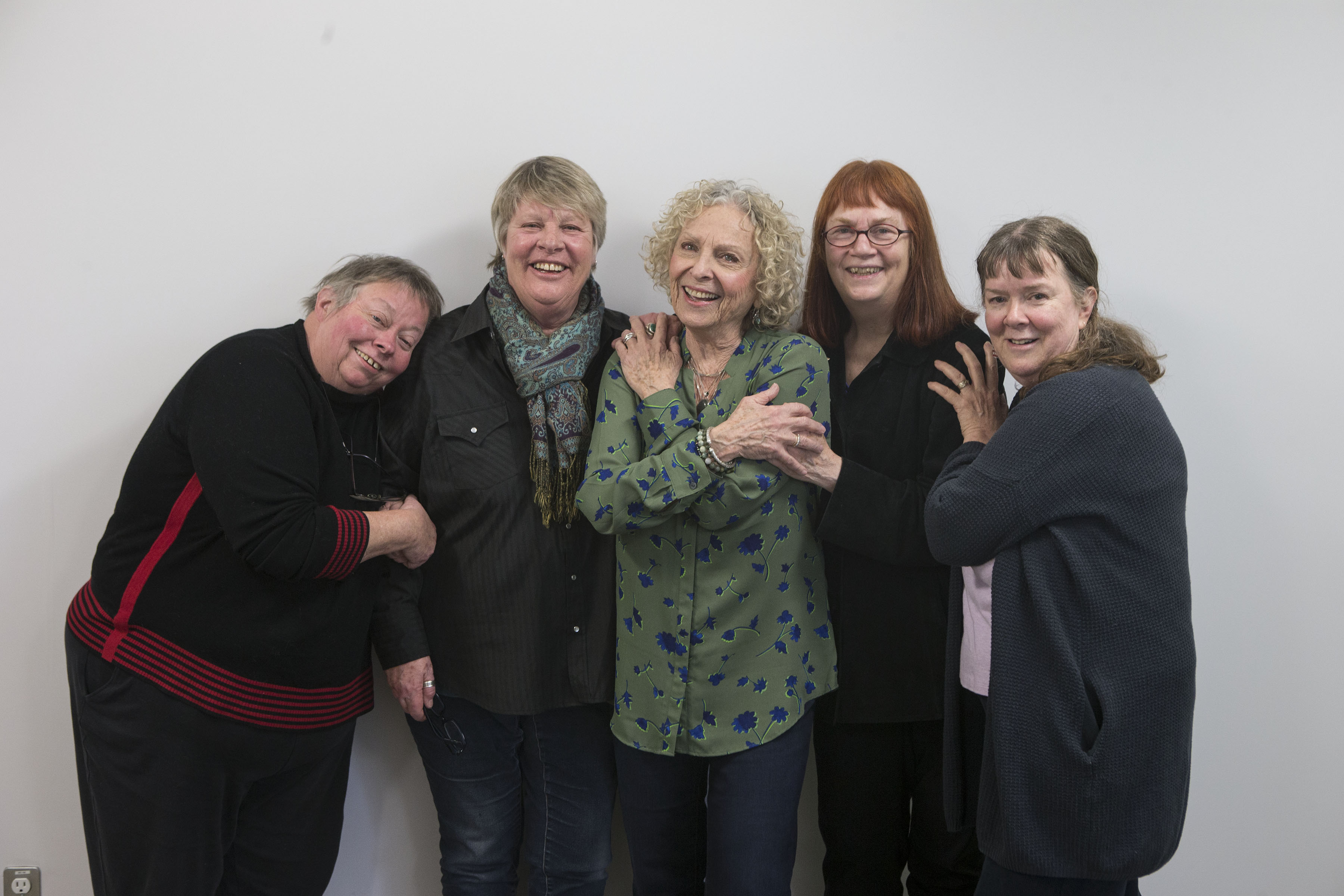
Be Bold for Change this International Women’s Day

By | News

Every year on March 8, we pause to celebrate International Women’s Day. We celebrate women’s achievements, their contributions to the world we live in, and we celebrate women’s strength and determination to continue raising the bar towards the goal of gender equity and equal human rights for all.

The theme for International Women’s Day in 2017 is #BeBoldForChange. Now there’s something we at Interval House have never been shy to do. So bold were our founders when they set out to establish Interval House in 1973 that the newspaper headline on opening day read, “radical feminists house runaway wives.” No, Interval House was not wildly popular with the general public when its doors first opened but it provided a much-needed resource to women escaping violence and their children. The shelter quickly became a community staple in Toronto. Interval House was and continues to be a safe place for women to run to when they decide to leave abuse behind and build bright futures for themselves and their families.

When we think of being bold for change, we think of all the women that have made the difficult decision to flee a life of violence and the comfort of the familiar in order to seek a life of safety and self-sufficiency with the support of Interval House and organizations like it. Our clients often leave everything behind, which is no doubt frightening. But they gain so much in the process. Through their journeys, the women we serve find strength, confidence, improved life skills and even community.

Yes, after over 40 years in the community, we have seen firsthand how brave and bold women can be in the face of adversity. But still we dream of a day when we can close our doors—a day when violence against women is no longer a rampant societal issue—and that day still seems a long way off. At Interval House, we work tirelessly to expose the cycle of violence and highlight signs of abuse. Imagine our frustration at seeing abusive behaviour romanticized in the media every day. It’s in music videos, television shows, movies and even the news. It’s in the lenient sentences handed to perpetrators of domestic abuse and sexual assault. We see controlling, obsessive and even violent behaviour chocked up to men’s displays of passion and even sold to young women as idealistic love. We know better that. That’s why, in our latest Public Service Announcement (PSA), we highlighted the subtlety of emotional abuse when it comes to violence against women, and how problematic it really is. We flipped that romanticization on its head to reveal how truly dangerous controlling behaviour is. If you haven’t yet seen it, check out the PSA called “The One That Got Away” here.

We’d love to see the media #BeBoldForChange and do away with the old stereotype that when men treat women badly, it’s a sign of attraction. We’d love to see healthy relationships highlighted while unhealthy relationships are revealed as toxic and unacceptable. We want young women and girls to have better examples presented to them so that they understand that love and possession are not one and the same. We want to end the cycle of violence for good. Until that day comes, Interval House will be here to advocate for women’s rights and safety and to empower the bold women that walk through our doors every day. And we will thank you for supporting us in our important work.

Happy International Women’s Day.

Part Two: Navigating Family Law When Faced With Intimate Partner Violence

By | News

By: Kali Madej 

Leaving an abusive relationship can be a complicated process. It has additional layers to it when there are children involved. When a woman flees her home for safety in a shelter or to stay with loved ones, it’s imperative that she files for custody immediately to ensure her abuser does not attempt to report her as a missing person or the child as abducted. When she arrives at a shelter or other new place of residence, she can call the police to let them know her location and that she has left an abusive relationship. Police will verify this information and the abuser will only be told she and any children are safe.

Applying for custody means applying for decision-making power on behalf of a child. Having custody allows a guardian to determine a child’s place of residence, school, medical treatments, etc.  There are many kinds of custody—sole custody, joint custody, shared custody, split custody, and access. The court always makes decisions based on the best interests of the child, and generally believes the child should have as much contact as possible with both parents, though cases with abuse and violence differ greatly. The court will consider numerous factors in making custody decisions including:

  • the emotional bonds between the child and each person making a custody claim
  • other family members and loved ones present in a child’s life
  • the child’s views and preferences
  • the length of time the child has lived in a stable home environment
  • ability and willingness of each custody claimant to provide guidance and education, provide essential things the child needs, and take care of any special needs the child may have

In situations of domestic violence where there is a perceived threat to the child, a woman can ask for the abuser’s access to be blocked, or for supervised access only. Supervised access means that visits would be conducted at a facility so they can be supervised by social workers. Make no mistake – even if the child is not being abused directly, witnessing intimate partner violence is a form of abuse and can affect the child long-term. A one-parent household is much healthier and safer for a child than a two-parent household with an unhealthy relationship dynamic. If access is granted to one parent, they do not have decision-making power but they do have the right to information about the child’s health, education, and general situation.

To officially apply for custody, there are forms on the Ministry of the Attorney General’s website that must be filled out—Form 8: Application, and Form 35.1: Affidavit in support of a claim. The affidavit is the opportunity to explain to the court the plan to care for the child and why it is a good one. It is best to indicate how you will be able to provide stability to your child, and the opportunity to reach their full potential. When there is an emergency situation including violence, providing as many details on the affidavit as possible is recommended along with the immediate plans – i.e. residing at a shelter temporarily before finding new housing, etc. There are two additional forms that need to be completed when asking for immediate order— Form 14: Notice of Motion, and Form 14A: Affidavit.

Under the Children’s Law Reform Act, judges need to consider if someone applying for custody or access to a child has committed violence against specific people when determining if they’re fit to be a legal guardian. The court needs to know if either parent has committed violence against:

  • their spouse
  • the parent of the child in your application
  • any member of the household
  • any child

Through dramatized television shows and movies, there is a perception that custody cases are long and drawn out. In reality, they may be solved rapidly. Taking care of the emotional health of the child must be a priority during the proceedings and as they adjust to their new surroundings. Letting the child know that they are loved and cared for and will be safe and supported in their new reality is key. If possible, providing the child with a toy or item from their former home may be beneficial. Through shelter therapy programs, children will have the opportunity to heal through art and interaction, excursions and day trips, and positive male and female role models. There are additional resources available throughout the court process such as the Child Victim/Witness program which can provide additional emotional support.

The human spirit embodies an unflappable resiliency, and children are no exception. In a healthy and stable environment, the sky is the limit when it comes to meeting and exceeding personal potential. Getting out, getting help, and getting custody lay the groundwork to a beautiful and promising new beginning for women and children alike.

Exciting Changes to BESS

By | News

We recently carried out an assessment of our Building Economic Self-Sufficiency program (BESS), to find ways in which we could improve our clients’ success in the program. Following the BESS assessment, we will be making the following improvements to our program:

  1. Barrier Removal: we believe that if we can alleviate whichever barriers are most impeding a woman’s access to employment, teach her the cyclical nature of progress, and arm her to deal with the effects of her abuse, she will be more confident and capable in her journey toward employment and self-sufficiency.
  2. Service Expansion: we will now be offering a wider range of workshops aimed at eliminating employment barriers; working not only on job-finding skills like resume building and interviewing, but communication and interpersonal skills to thrive in the workplace. We have also added a counsellor to our program to address the psychological and emotional effects of abuse, with workshop topics like stress and anger management.
  3. Elimination of eligibility criteria: BESS used to require clients be “employment-ready”. We will now be accepting women at any point in their journey toward self-sufficiency, provided they have survived intimate partner abuse and have left the relationship. We have equipped our program to help women become “employment-ready” if they are not already.

One aspect of our improved program is to bring in guest workshop facilitators to conduct sessions with our clients on useful information that pertains to their job search as well as other aspects of their unique situations as survivors of intimate partner violence. We have found these workshops very useful for keeping the programming interesting and relevant, and we’ve been able to reconnect with clients that we hadn’t seen in a while because they were interested in the new workshop topics not strictly related to employment.

The most popular recent guest facilitator workshops have been an information session with Detective Jennifer Metzger, of the award-winning Victim Support Unit with Toronto Police Services; a workshop on Legal Aid Ontario; an information session and Q&A with a Peace Officer from the Ministry of Labour to talk about Employment Standards; a workshop on effective job searching with Indeed’s Job Squad; and a workshop on financial planning with the Credit Counselling Society of Ontario.

We are very excited about the changes to the BESS program and the positive implications we believe they will have for our clients, so please get in touch if you would like to learn more!

Contact Us:
Tel: 416-924-1411 Ext. 279
Email: bess@intervalhouse.ca

Translate »