
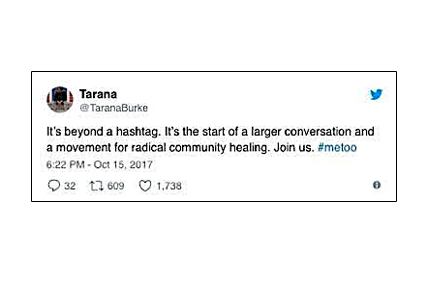
Following sexual assault allegations made against film producer Harvey Weinstein, women flood social media disclosing their experience with sexual harassment and assault along with #MeToo to expose the scale of the problem. Widespread media coverage of the movement prompts discussion and policy change in virtually every industry.
#MeToo Movement in Canada
The Canadian Encyclopedia
Read the interview below with Fred Shayo-Mushi, a Children’s Recreational Facilitator at Interval House.
First of all what is your formal position title? Is it recreation facilitator?
The title is Children’s Recreational Facilitator.
Specifically for the kid’s program, 4 years and up, especially if they can attend group and take part in it they’re eligible.
Ok excellent. So let’s maybe start at the beginning.
How did it all begin and how did you come to land at Interval House?
Somebody knew me from outside of Interval House because when I was a student, I was placed at a Toronto school district board, grade 5. I was in the classroom with somebody who had worked for Interval House for almost 10 years at the time. She kept telling me ‘you really really should try working for Interval House because I think you’d be a good fit’ because of the groups I was running with the kids in the classroom.
She recommended me to the manager here, this is almost 10 years ago actually, it’s been a while. Then she took my resume and brought it, and then she arranged for my interview. So I have to really give her credit because I’m not sure what kind of triggers I’ll bring—I was very cautious and very nervous about it. She did a really good job of calming me down and making sure that everything will be ok. You know, literally, it’s just going to be kids you’re working within school. At the time I was volunteering for Big Brothers and Big Sisters in Toronto, so those kids. and I was also teaching soccer to 12 – 18-year-olds. So it’ll be exactly the same thing really, the fact that they’re staying at Interval House is really irrelevant.
So I said okay and I came for an interview and they did a very gentle way of interviewing me, more like reassuring me, that I could give it a try and after the first few months I was like ‘okay, I think I can do this even as a volunteer.’ It was ‘no, no, no we will pay you, you’re in school, we’ll pay you, this is a really good position and somebody else has been here before you and you’ll be a good fit.’
That’s basically how I started and it’s been almost a decade now and it really is quite nice. It’s a change from what I do full-time so usually when I come here it feels a lot less than work. It’s actually a lot less than actually volunteering; it’s fun and the kids usually have good energy and they respond well.
Amazing.
Basically, all I’m supposed to do is do recreational activities and try to address concerns that the kids have. So very simple things; how to communicate, how to put language to what they’ve experienced, what kinds of things to tell their friends and peers at school about where they’re staying, why they’re staying.
At the same time, I’m trying to help mothers and women who are here. Especially the women who don’t know the city very well—what’s available in the city for a good price or free if we can. Just get into the habit of having quality time with their kids outside if possible, but if not, inside. You know what kind of things can you do with your kids that are both fun, full of play and a little bit educational? Addressing some of the challenges that they’ve got.
So did you ever think that this is the kind of work that you would be doing in the future?
No actually. My first degree was in computer sciences, software engineering and I still do that a little bit.
My full-time job is actually as a youth counsellor, team leader in a transitional program for 16- to 24-year-olds. Those two are the things I do and this is very much the role that it was which is Thursday and Saturday just recreational activities. I never expected that I would be doing this for this long. It’s just that it’s been a very good fit despite a few challenges with the schedule—but it’s still definitely worth it.
It seems to be a common thread, everybody I speak to at Interval House, there is just this passion for the work that you all do.
Absolutely, you get hooked, families, especially the kids for me. I figure if I wasn’t doing this or computer science, I would have been a teacher or something else so I like doing that type of stuff, I like running groups.
Excellent. So would you say that you grew up with volunteering and sort of community involvement being a big part of your upbringing or is this something that is uniquely you?
Partly. So why I was teaching soccer, why I started volunteering for Big Brothers is because I was new in Toronto. I had lived in a few places and it just felt like a nice way to kind of give something and connect to people.
That was really the initial reason. I was like, ‘Ok, I have a passion for soccer. I could teach it if kids want to learn, absolutely, I can organize it with the parents and teach them how to play soccer.’ I get my exercise; I get people to play soccer with. Initially, I was thinking maybe 18 and up, and then I realized not many Canadian kids 18 play soccer. They want to play hockey or baseball and stuff like that so I had to lower the age and it turned out very well.
So that’s how it started just something to do to get involved, get to know Canada a little bit, give back. And then with Big Brothers, Big Sister that was intentional it was just the idea of ‘ok, I like teaching anyhow, these kids could really use somebody.’ So, I went to that, because again, I had a bit of time and it was another way of just connecting. Computer Science is a bit tedious.
And you realize of course you’re quite exceptional because a lot of people have interests, but it doesn’t necessarily include giving back to their community, so good on you.
Congratulations, I think they’re very lucky to have you.
I generally feel like I am lucky to be fair. I do walk in and I receive really good reception from the kids so it’s a bit of a … maybe I like to be liked.
We all do.
So, tell me what is one of the best things about what you do at Interval House?
Initially, I was always measuring. I remember when I started, I was wondering ‘these kids have gone through this, they’ve seen this’ there’s a few cases which I was absolutely devastated. You know, I was ‘I cannot imagine going through that.’ Basically that kid’s life is ruined for good.
Then through the activities, through play, interactions, and everything, you start to see a little bit of the kid coming out. They’re able to tell jokes, they laugh at jokes, their lives start to show other areas which are not necessarily just what they experienced. And then, over time, you actually see somebody come out of their shell, their personality and humour, and they’re proud and happy about little things. It’s exceptionally satisfying to see that transition.
After being here for 10 years now, I’ve actually seen some of these kids who continuously—with every Christmas or when we have our annual picnic—they show up, they remember, they’re grateful, they’re doing very well in high school.
Some of them are now in university doing well and it’s kind of like, wow! And they’re coming back and volunteering you know. It’s really satisfying to see that, to a degree, I took part in shaping how they see the world and they’re positive, they’re optimistic and they’re actually doing quite well. So I would say, over time that’s the best thing ever. Even when I couldn’t see the changes right away or maybe the changes were so small, it kind of set a different path, so that’s quite satisfying.
That’s very insightful and it must be super rewarding to know that you’ve, no matter how small, you’ve played a really instrumental role in a child’s development.
And so that would be true of anybody who works here. At least with the kids there are letters, and it’s ‘oh I remember this kid’ and then they show up. Everybody who’s worked here for some time and stayed, they will say the exact same thing – that it’s quite rewarding.
Incredible.
So on the flipside of that though what do you find is one of the toughest parts of your job?
Well the stories are usually devastating no matter what. Like hearing that somebody at a very young age went through either experience or was a witness to something so traumatic, something so devastating, it’s always really, really hard. Sometimes you kind of carry that home with you.
Is there one moment or story that has sort of always stayed with you through your 10 years?
I mean not necessarily a bad story but even an exceptionally good story. Is there one moment that really sticks in your mind?
There are several.
One was a bad story. I’m thinking a kid would witness his uncle was involved with bad people so he witnessed the murder of his uncle. So the kid was like 6 or 7 and he just didn’t talk, so that was harsh.
On the flipside there’s a really good story: it was a refugee from Syria who came in and of course was terrified of everything. We were doing activities about safety and he draws a house surrounded by different fences and the Navy Seals surrounding and cameras everywhere and like, wow, this kid is really terrified of the world. He was very attached to me and the other counsellor who was here at the time. He was 9 and I saw him when he was 11, I saw him again when he was 14 and he still remembers. He’s still very polite, he’s very optimistic, he’s interested in all the arts. To see the person who was so terrified of the world opting to re-engage in a genuine, optimistic way, it’s very very good.
Isn’t that one of the amazing things about kids, is there’s such a great deal of resilience?
Absolutely, I always underestimate how easily they can recover or grow rather not recover, grow and have a wider view of the world so that’s really good.
Here’s a really tough question for you; what is your superpower?
Most kids will probably say I’m weirdly competitive so I compete about everything but I think it’s because I’m joking; I use a lot of humour.
Excellent. That’s probably a really good bridge too, for reaching out.
And my co-workers are saying “Joking” in quotations. No, I try to get them going, so humour goes a long way.
Absolutely. it’s sort of like a universal bridge isn’t it?
Oh yeah.
And it’s hard to be upset or angry with somebody who’s laughing and who’s got a great smile.
Yeah, the only trick is it usually takes a while for the younger guys to get it, but once they get it, it’s awesome. Usually, they stay a couple of weeks and everything they say is funny and literally it opens all new doors, there’s a personality.
What are some of your favourite activities to do with the kids?
It depends on the season… so in the summer we spend a lot of time on nature walks. We’re next to this beautiful, treed area, trails along the Don Valley so usually we go and watch the train. Or we can just cross over and there’s a farm, it’s called Riverdale Farm with animals. People in that neighbourhood will usually bring up their dogs in the park and they’ll be playing so that’s really good. I love to do that when the weather’s good.
In winter, when it’s terribly cold there are a few outings that are tolerable and fun, including going skating. There’s a place called Harbourfront in Toronto where they go skating. Having seen kids—the ones who know how to skate or the ones who have never been on skates—learning how to do it, it’s really fun. They’re falling and they’re happy and they’re laughing. It’s really, really good, especially because I’m not a good skater, so I provide a lot of humour.
I should come hang out with you guys then.
Yeah. In the late summer there’s Centre Island. This is an outing that usually costs quite a bit of money so you pay for the ferry and all this stuff so you go to Centre Island, they look at the flowers, boat races, all the fun things that happen at the island.
And of course, I love going to movies cause I’m a movie fan. We’ve taken quite a few families who had never been to movie theatres. The kids are like 6, 7, it’s like “Wow! So big.”
You must actually find that a lot with these outings and activities that you do – that oftentimes it’s a first.
It’s a first, yeah. Like going on a boat to get to The Island kids are like ‘wow, I’ve never been on a ferry, wow, look at this’. It’s really eye-opening. Or being close to a train; the train just runs and it’s just a train, but kids are really excited and on cloud 9, so it’s really fun.
And actually for moms too. For women who are troubled, when we go out on a Saturday. Like last Saturday we went to High Park and they have a mini zoo. It doesn’t have that many animals. They have the yaks, the bisons and some weird goats that climb on rocks. The women who had never seen that were absolutely excited, like taking pictures and talking very loudly in different languages. So it was like ‘okay, this was fun!’ Now they know where it is. If, at any time, they want to go, they can just hop on the subway, they know which station to go in, which one to come out, and how to get to that. And it’s free.
So you’re not just facilitating activities you’re actually putting together activities that can be recreated by the women.
That’s really the primary reason so you can do this even if you don’t have any money you have only your tokens, your kids don’t need tokens you can show up here and do this with your kids.
That’s amazing because you’re truly giving opportunity to experience the city on their own steam as well.
We have quality time to see the city. Often the simplest thing like how to use the subway system; how to pay, how to take transfers, where to get off and all this stuff, what to expect in the subway, what’s the normal behaviour in public transit. For people who are new in the country or someone who’s been in the country but they’re very isolated it’s a really good lesson cause they would otherwise just stay in because that’s what they know to do.
I think it could probably be quite overwhelming, even if you are from here and if you don’t do it very often. Or you haven’t done it. I think that’s a real gift to have someone be able to walk you through that process.
Yeah, moms with little kids and strollers and they’re terrified of transit because ‘oh how are you going to go there?’ Well, you can do it this way, you can do it that way, people will help if you need help. It’s very practical and once they do it once I guess it takes away the fear.
Right.
It’s really giving people freedom to explore and spend quality time outside of this space.
And independence right!
Independence, yeah.
In all your work, if you could have a child remember only one thing that you say, what would that be?
Only one thing; play. Because they can be happy and play like kids that’s it. Usually when people say ‘what do you do?’ I say, I try to teach kids to play and be happy and be kids again. I guess that’s pretty much it because once they’re able to play and have fun, I think everything else kind of falls in place. All will work out—their relationships with their peers will work out, and they’ll have fun in their lives. So I think that’s pretty much it.
I think that’s a very honourable goal and intention. It has been such a pleasure speaking with you.
Thanks.
I thank you for your time and thank you for all the work that you do at Interval House. I know from speaking with others and I know just speaking with you that you are making a tremendous difference.
Thank you so much I appreciate it.